
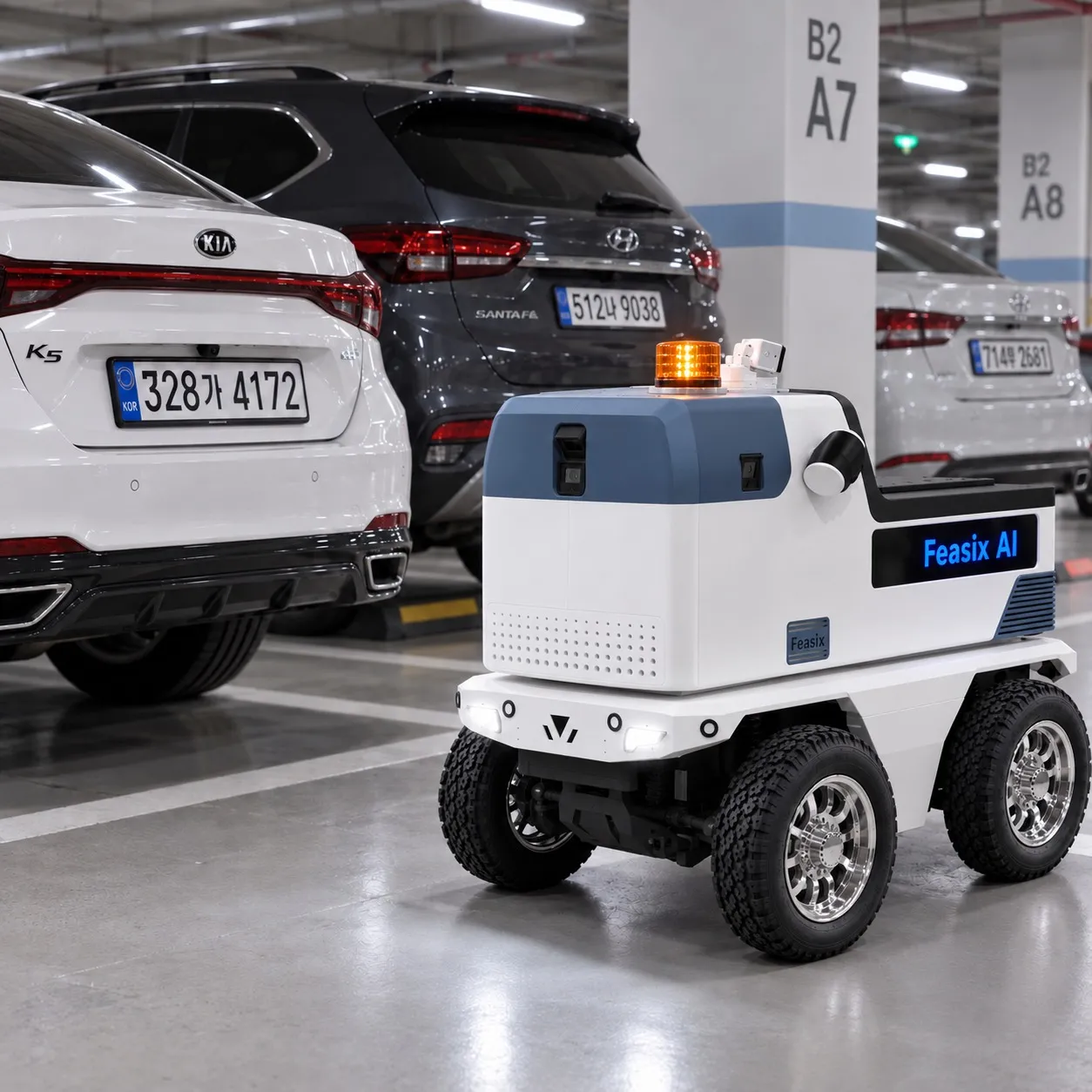
Automate parking monitoring
with robots.
The robot moves through the parking area, reading license plates to identify unregistered vehicles and parking violations.
Staff review vehicles that need further verification and take the necessary action.
Everyday Operational Challenges
Tailgating, unregistered vehicles, and recurring parking complaints
Even with an entry barrier, vehicles can follow another car through or park without being registered.
Staff still need to check the vehicles on site, verify whether they belong to visitors, and ask drivers to move when necessary.
Vehicles That Tailgate Through the Barrier
When a vehicle follows another car through the barrier, entry records may not match the vehicles actually parked on site.
Vehicles Missing from Registration Records
Staff must compare license plates with registration records to determine whether a vehicle belongs to a visitor or a resident whose registration is missing.
Double Parking & Blocked Access
When a vehicle blocks a lane or another parked car, staff must check the situation and ask the driver to move.
Vehicles Ignoring Designated Spaces
When ineligible vehicles park in compact-car, accessible, or EV charging spaces, residents who actually need those spaces can't use them.
Long-Term Parking & Visitor Overstays
Visitor vehicles that stay past their allowed time, or cars left in one spot for a long time, only come to light after repeated checks.
Residents Looking for Their Cars
In a large parking area, residents who can't find where they parked also end up asking the management office.
The robot reads license plates as it moves,
then checks them against registration records and parking rules.
01 Vehicle & License Plate Detection
The robot follows a configured route, detecting parked vehicles, reading their license plates, and recording where they are parked.
02 Checking Registrations & Parking Rules
Detected license plates are compared with registered vehicle records, and each vehicle is checked against the rules for the zone it is parked in. Unregistered vehicles and suspected violations are flagged for further verification.
03 Staff Review & Follow-Up
Staff review the recognition results, verify whether vehicles belong to visitors, and take any necessary action, such as asking drivers of violating vehicles to move.
Spend less time checking vehicles,
and more time taking action.
Reduce Repetitive Vehicle Checks
The robot reads license plates and compares them with registration records, helping staff with checks they would otherwise perform one vehicle at a time.
See Which Vehicles Are Actually Parked
Alongside entry records, staff can review the vehicles the robot actually detects during its rounds.
Prioritize Vehicles That Need Attention
Staff can focus on vehicles flagged for further verification and take follow-up action, instead of checking every vehicle individually.
Catch Parking Violations Along the Way
Designated-space violations, double parking, and long-term parking that staff used to find on patrol are checked by the robot during its rounds and flagged for action.
Help Residents Find Their Cars
Using the parking locations recorded during its rounds, staff can tell residents searching a large parking area where their car is.
Before deployment, we assess the operating environment and data integration requirements.
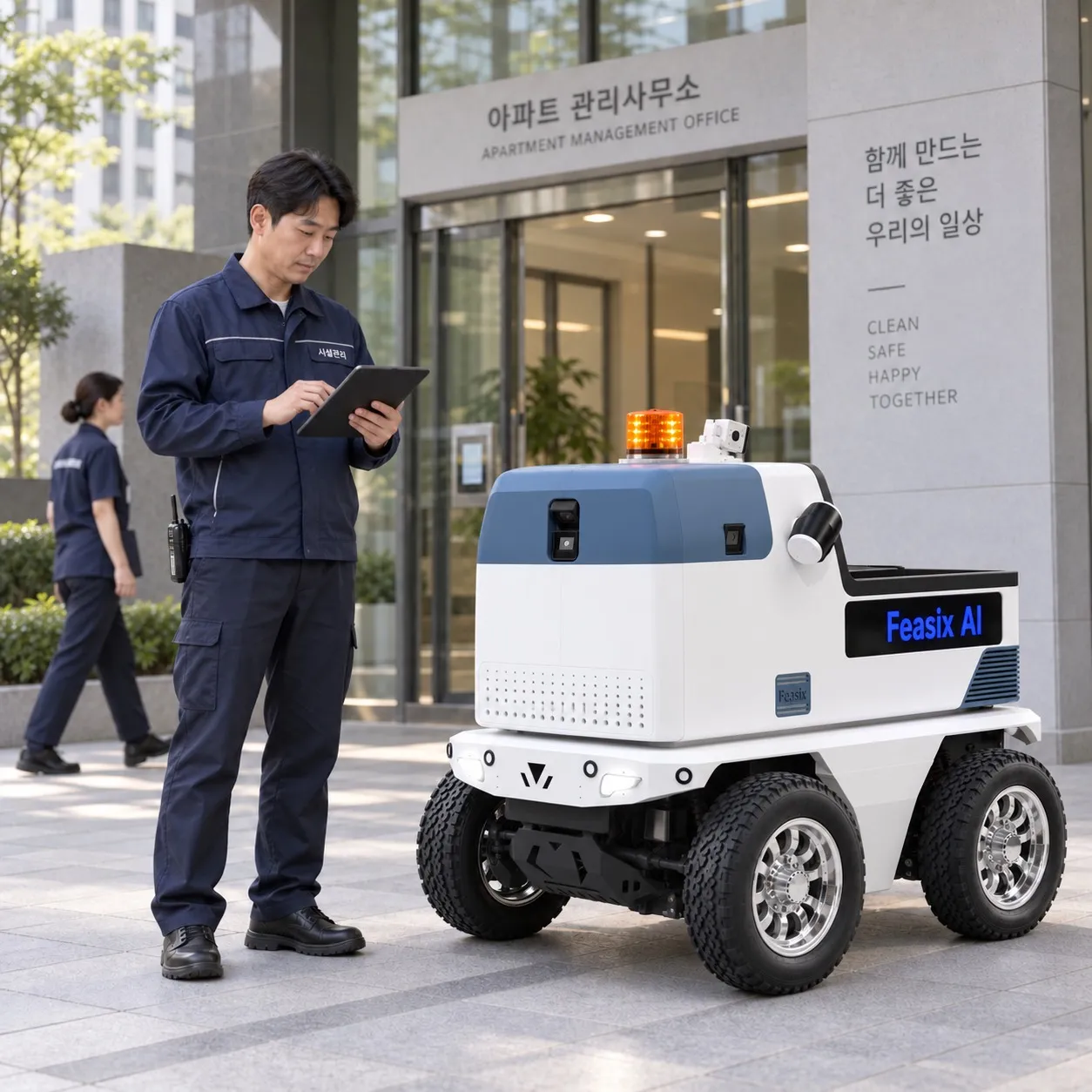
Operating Areas | Underground garages and surface parking lots suitable for robot operation
Site Conditions | Travel lanes, slopes, lighting, and license plate visibility
Data Integration | How registered vehicle data and zone-specific parking rules will be integrated
Operational Responsibilities | Staff are responsible for final verification of recognition results and any follow-up action
Vehicle information reflects what the robot detects during its rounds. Recognition results may vary with site conditions, including obscured or dirty license plates and parking area lighting.
Discuss Operating RequirementsOne robot,
multiple tasks tailored to your site
Equip one robot with the modules that suit your operating environment to meet the needs of different sites.
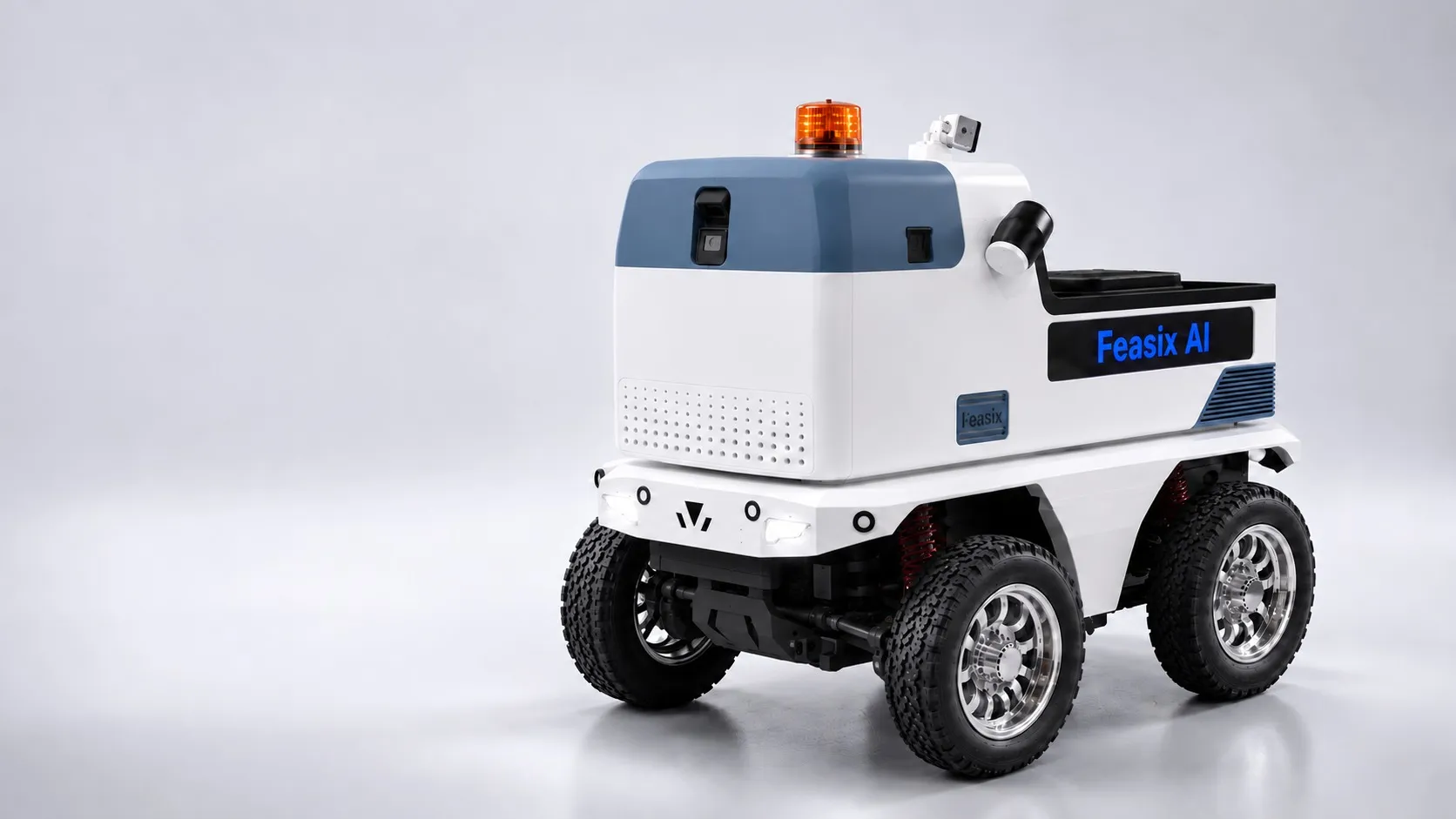
Base Platform
The Feasix mobile robot platform moves through indoor and outdoor areas. It supports tasks that require moving around a site to check conditions, such as parking monitoring and patrols.
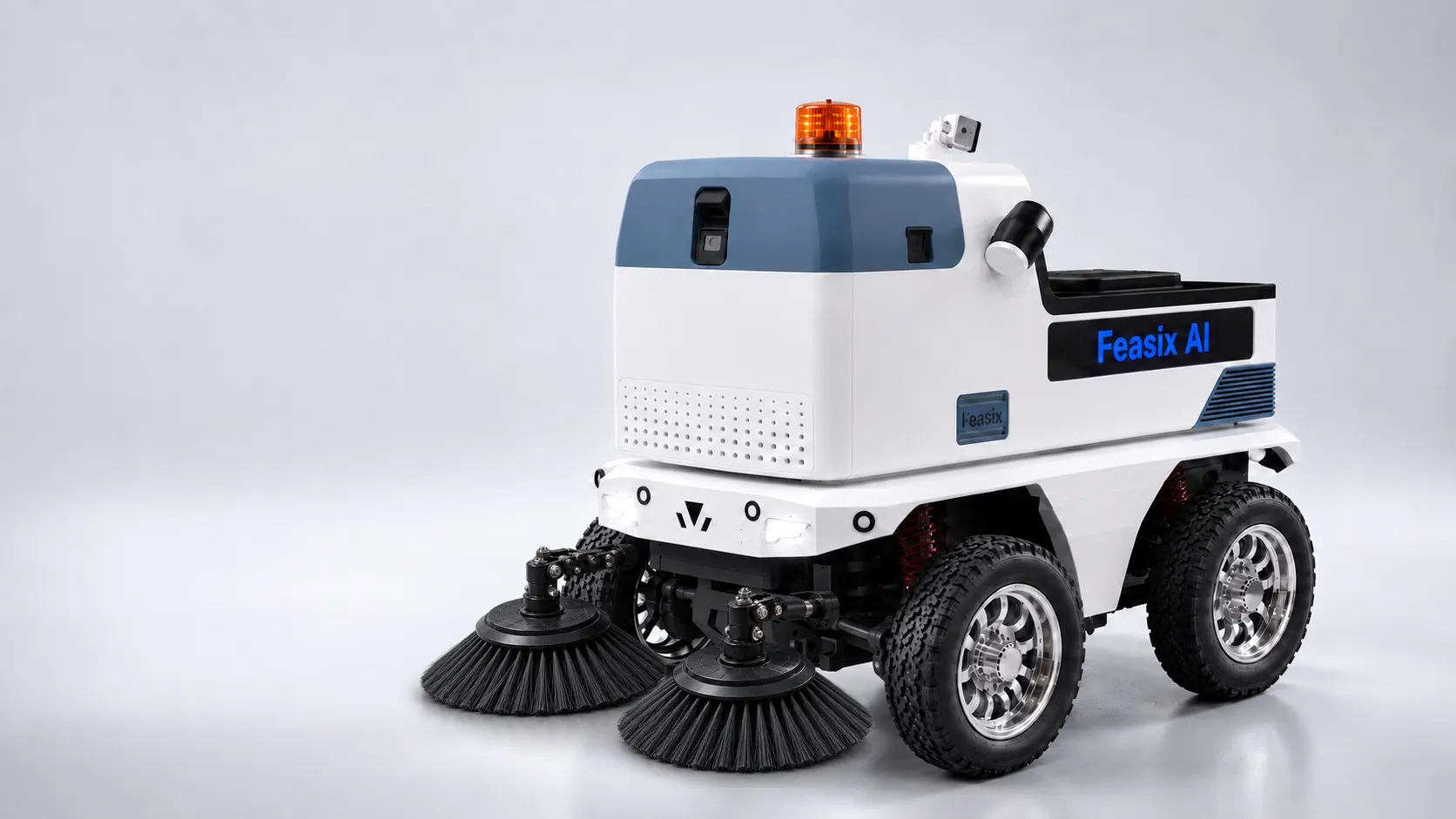
Cleaning Module
Two circular brushes extend outward to quickly sweep up dust and debris across a wide path.
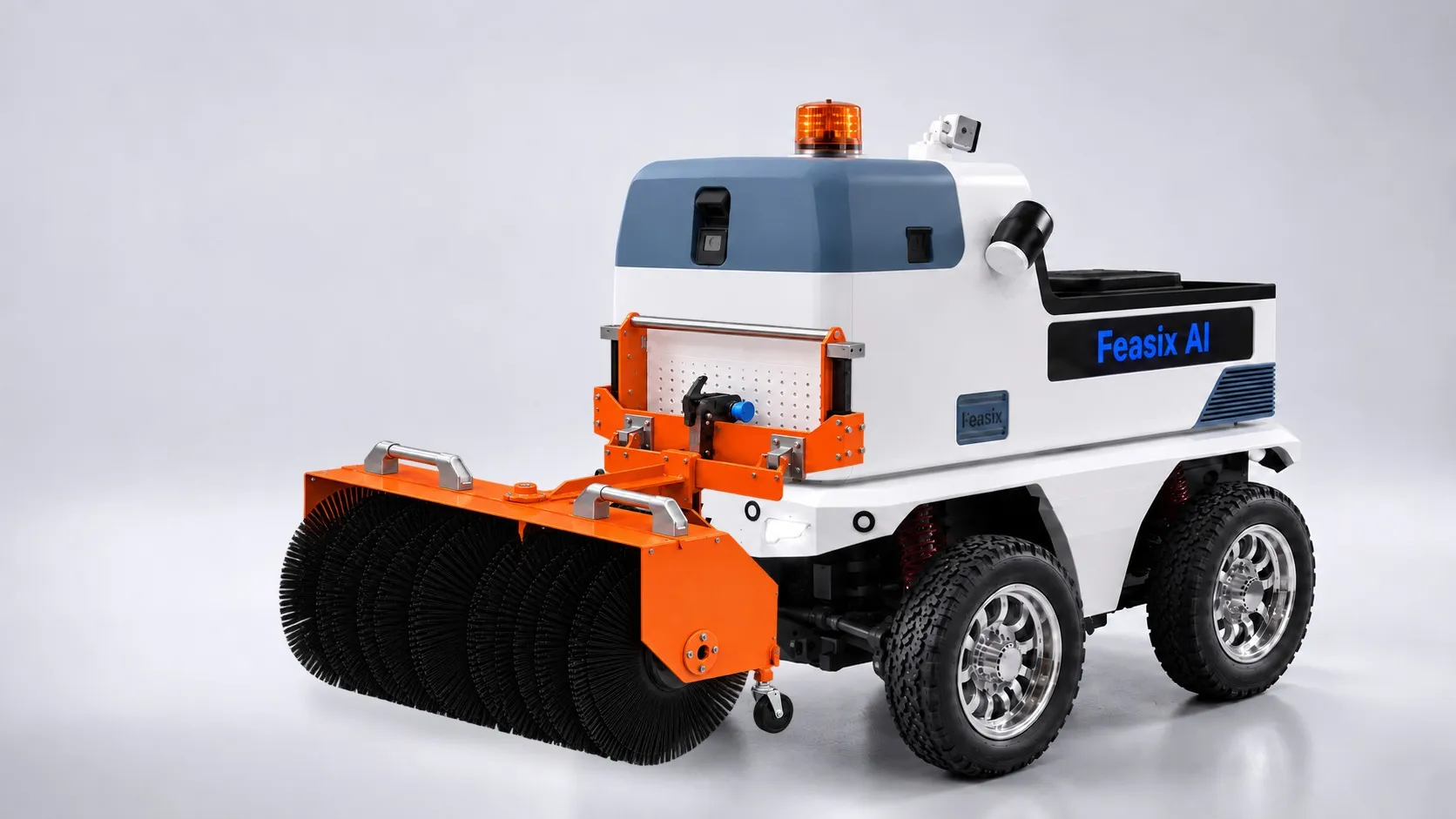
Snow Removal Module
A large roller brush covers the full working width at the front for intensive snow removal.
Putting Modules to Work
Parking checks and patrols every day. Cleaning and snow removal when needed.
Attach cleaning or snow removal modules to the same robot to take on additional facility management tasks.
Configure the module, operating hours, and work areas to suit each task.
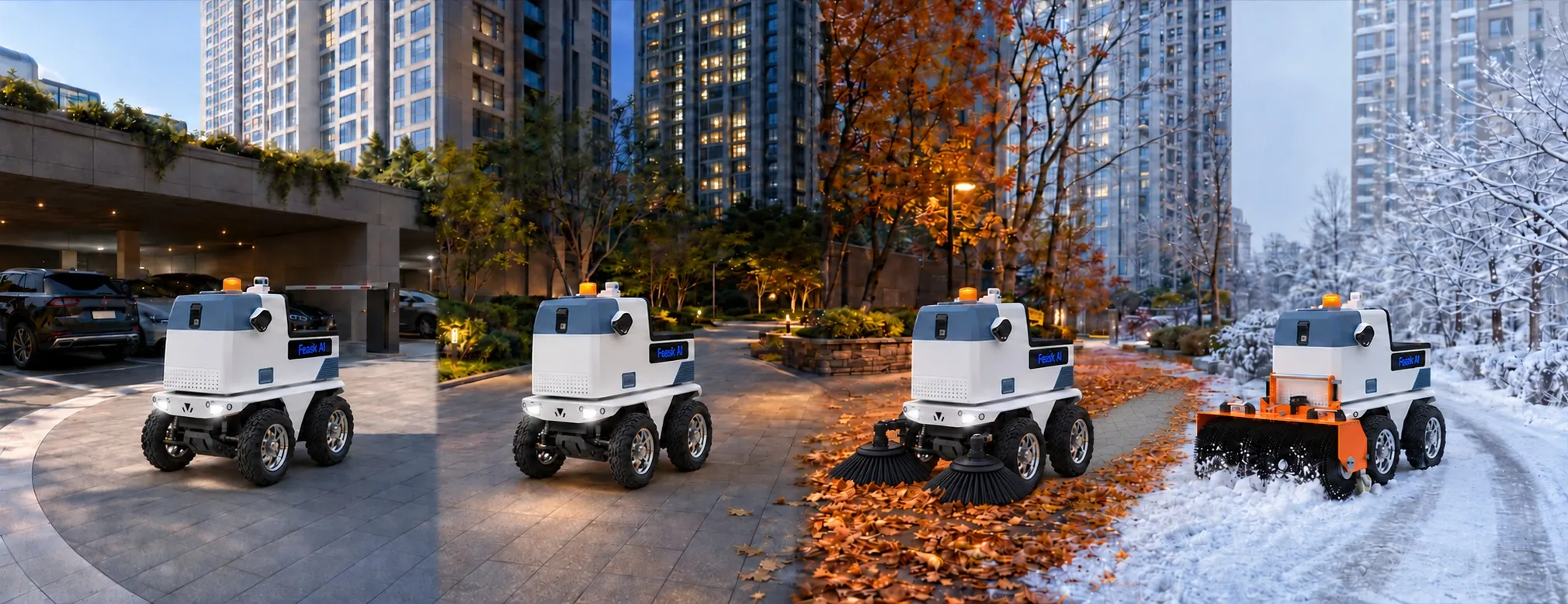
Some images are AI-generated illustrations intended to explain the service. They do not show actual deployments or serve as evidence of validated performance.
How would this work in your parking area?
Tell us about the size of your parking area, how you currently check vehicles, and how you manage vehicle registration records.
We will assess suitable routes and vehicle data integration options based on your site conditions.